Our Mission

The mission of the Cal-Bridge program is to broaden participation in STEM PhD programs, the STEM professoriate, and the STEM workforce in California and nationwide. Cal-Bridge utilizes an innovative and successful new model of multi-institutional partnership between all three segments of the California higher education system: the 23 campuses of the California State University (CSU) where many low-income, underrepresented students earn Bachelor’s degrees, the 116 California Community Colleges (CCC) where half of all CSU undergraduates begin their college education, and the 10 campuses of the University of California (UC), where PhDs are awarded. We fulfill this mission through the creation of a comprehensive, end-to-end pathway for the diverse undergraduates of California to successfully matriculate to PhD programs, achieve their PhD, and then join the STEM professoriate and workforce in California and nationally.
Our Pathway to Success

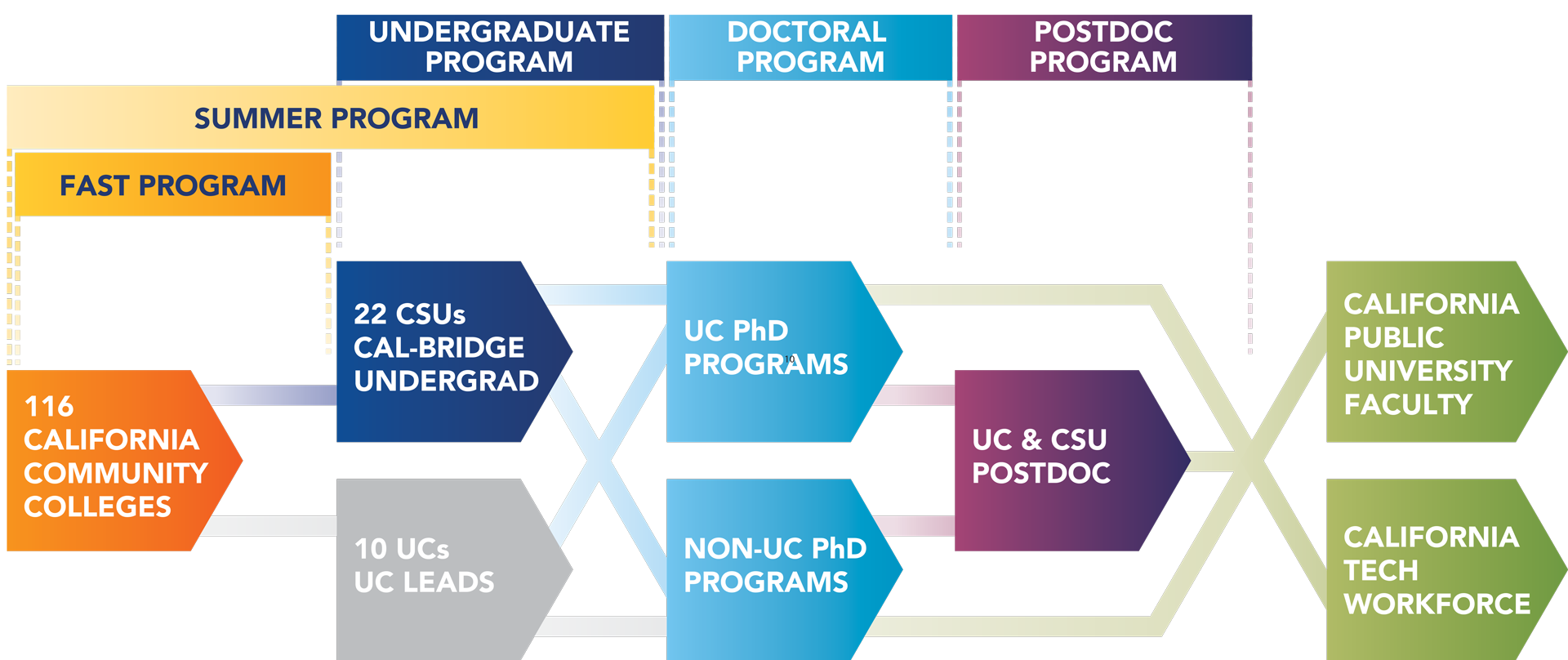
There are multiple pathways for our scholars, through the systems of the CA Community Colleges, CSUs, & UCs into the Cal-Bridge program. Cal-Bridge provides comprehensive end to end support from undergraduate to the professoriate.

Our Vision

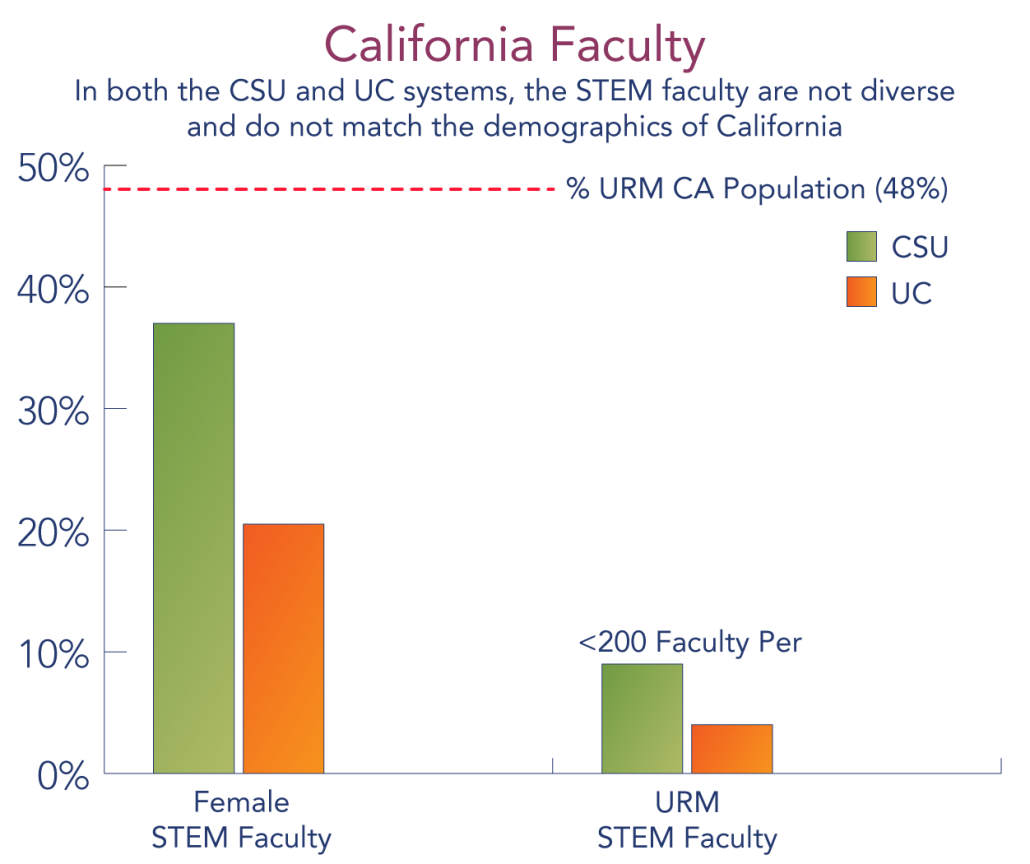
The long-term vision of the Cal-Bridge program is to transform and diversify the makeup of the California professoriate. Among California public university STEM faculty ranks, underrepresentation is severe: for example, while 48% of the state’s population belongs to underrepresented minority (URM) groups, currently only 4.6% of UC domestic STEM faculty and only 9.2% of CSU STEM faculty are from URM groups (internal UC and CSU data). Women and other historically underrepresented groups (e.g., LGBTQ+, persons with disabilities) are also underrepresented in California’s public university faculty and in the STEM workforce.

This lack of diversity in the California public university faculty has multiple negative impacts, including being a key factor leading students from Historically Underrepresented (HU) groups to exit STEM educational pathways due to a lack of faculty who reflect their backgrounds.

Increasing the diversity of the professoriate will therefore increase retention of these students in STEM majors leading to an increase in their participation in the California science and technology workforce.

Benefits of Accepting Cal-Bridge Scholars into a PhD Program

Accepting Cal-Bridge scholars offers numerous benefits to universities, departments, faculty, and the broader scientific community. Our diverse scholars are strongly prepared, have exceptional talent, proven resilience, and have received dedicated academic mentorship. The benefits of having a Cal-Bridge scholar in your department extend beyond simply enrolling talented scholars; they contribute to a richer, more diverse, and more impactful academic environment.

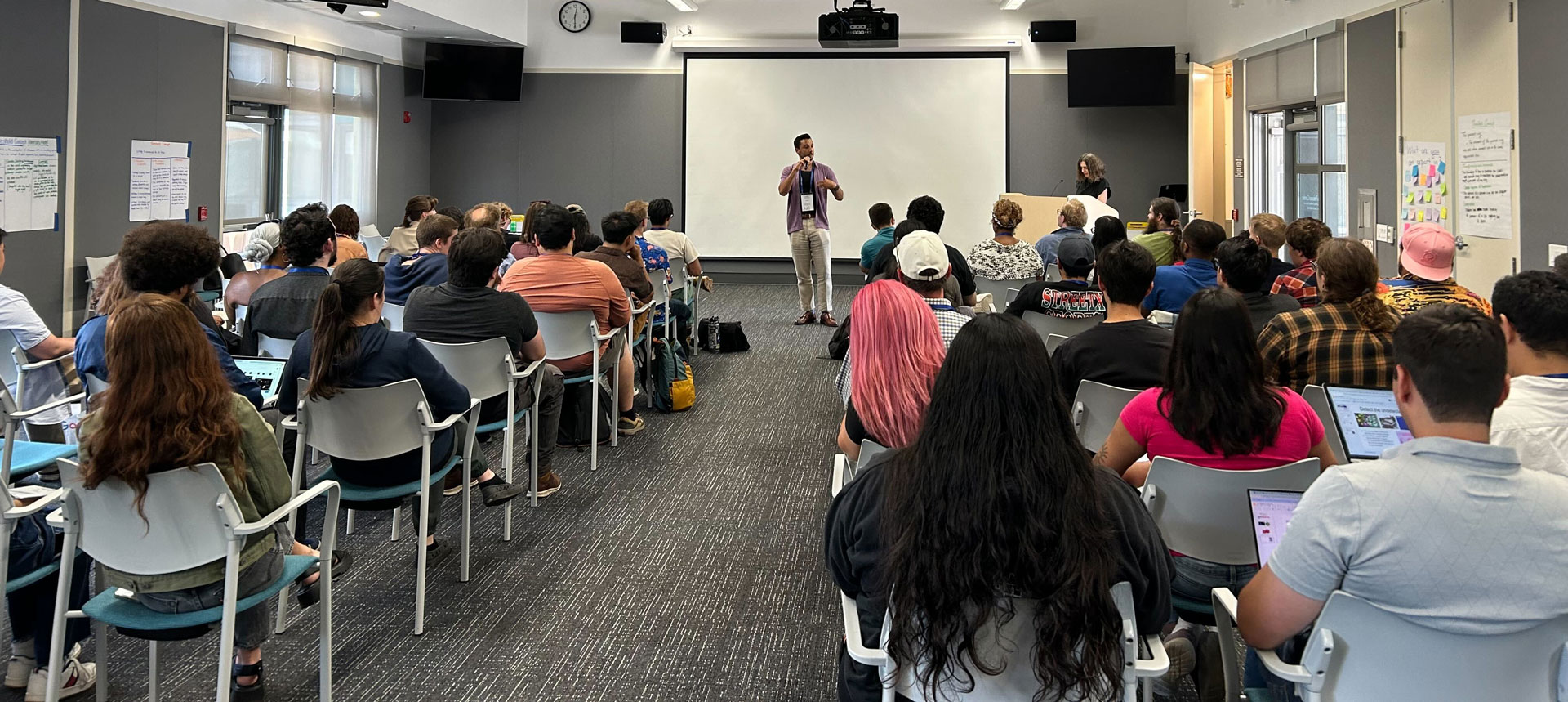
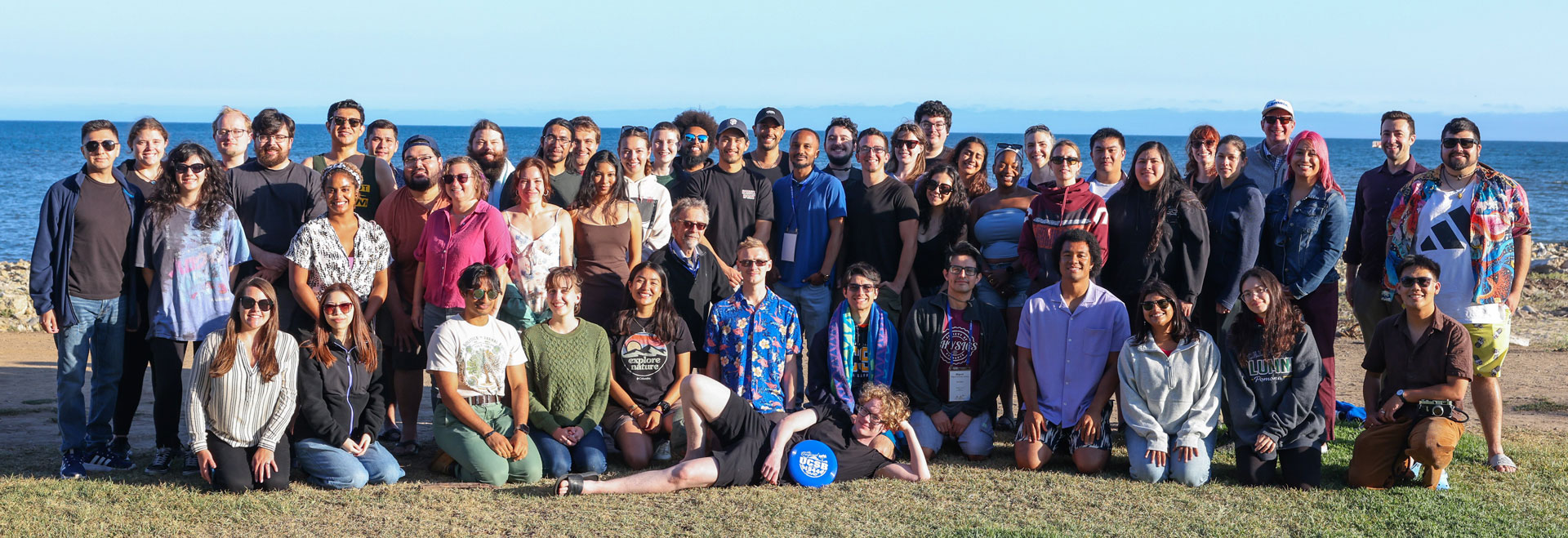
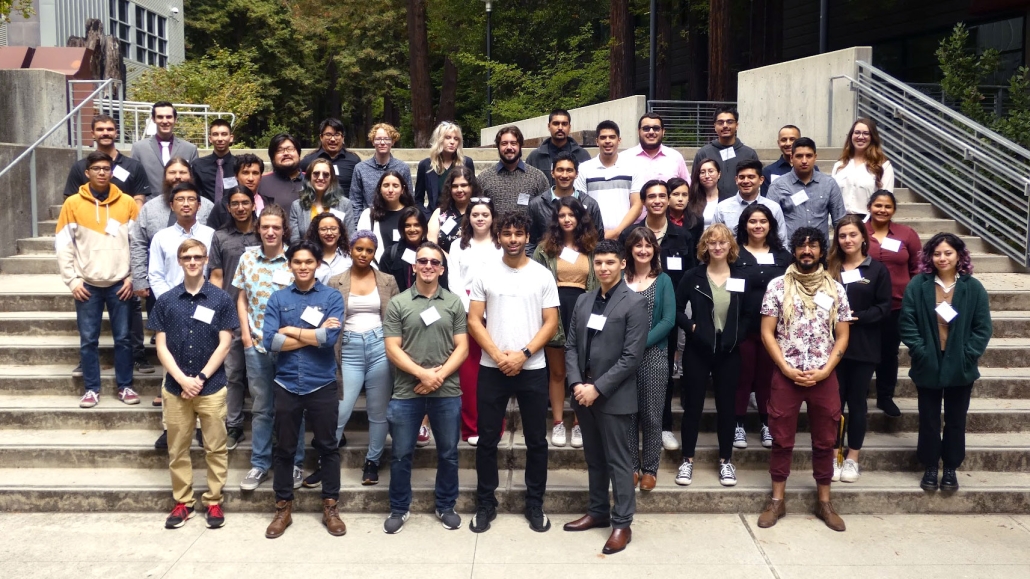
Cal-Bridge Doctoral Scholar Summer Institute 2025

Access to a Highly Motivated and Diverse Talent Pool

Strong Preparation: Cal-Bridge provides extensive academic preparation, research experience, and professional development training before scholars even apply to graduate school. This means they often arrive better prepared for the rigors of a PhD program.

Exceptional Talent: Cal-Bridge scholars are pre-screened and highly motivated scholars who have demonstrated strong academic potential and a commitment to pursuing PhDs in STEM fields.

Proven Resilience: Many Cal-Bridge scholars come from backgrounds where they have overcome significant challenges, indicating a high level of resilience, determination, and adaptability—qualities crucial for success in a demanding PhD program.

Dedicated Mentorship: Scholars have already benefited from extensive mentorship within the Cal-Bridge program, and they are typically very adept at seeking and utilizing mentorship, which contributes to their success.

Increased Diversity: Cal-Bridge is specifically designed to increase the representation of underrepresented minorities (URMs) in STEM PhD programs. Accepting Cal-Bridge scholars directly contributes to diversifying your graduate student body, bringing in unique perspectives and experiences that enrich research and learning.

Cal-Bridge Support for Scholars

The Cal-Bridge Doctoral Program is designed to support scholars pursuing PhDs in STEM fields, with specific benefits tailored to their university affiliation. For those who matriculate into a UC PhD program, the program offers substantial financial assistance, including a $40,000 Cal-Bridge Fellowship* that is administered by the PhD program to support the scholar’s study and academic development. This crucial funding enables UC scholars to dedicate themselves more fully to their studies and research from an earlier stage in their doctoral journey, providing a strong foundation for their academic and professional growth.

UC doctoral scholars also benefit from a mandatory 3-year Doctoral Professional Development Program (DPDP), which provides extensive training through week-long in-person Summer Institutes with covered expenses, and ongoing online meetings. This comprehensive program also includes valuable mentorship and attendance at the Cal-Bridge Fall Conference, further enhancing their pedagogical and presentation skills. Additionally, their participation in the DPDP is recognized with stipends, reinforcing the program’s commitment to their holistic development.

Cal-Bridge doctoral scholars are integrated into a supportive and thriving scholarly community. They gain opportunities to build peer-to-peer connections, access to the Cal-Bridge Alumni Council, and expand their professional network. The DPDP, in particular, cultivates a vital community space, especially beneficial for scholars from non-traditional backgrounds, fostering peer support and a sense of belonging throughout their challenging doctoral studies.

*Cal-Bridge is committed to fully funding Cal-Bridge Fellowships, but the final number of fellowships and amount is contingent on overall program funding.

Leadership

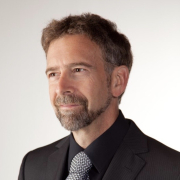
Dr. Alexander Rudolph

Dr. Alexander Rudolph

Executive Director, Cal-Bridge
Adjunct Professor, Physics and Astronomy, UC Irvine
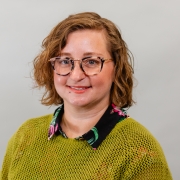
Dr. Carol Hood

Dr. Carol Hood

Director, Cal-Bridge Undergraduate Program
Sr. Assoc. Dean, Academic Affairs, Natural Sciences
Professor, Physics and Astronomy, CSUSB
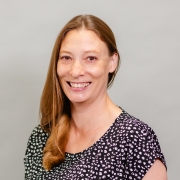
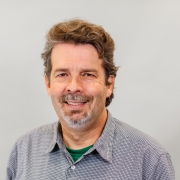
Dr. Bruce Schumm

Dr. Bruce Schumm

Director, Cal-Bridge Doctoral Program
Professor, Physics, UCSC
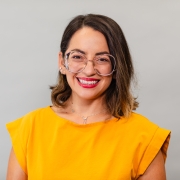
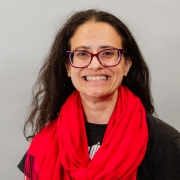
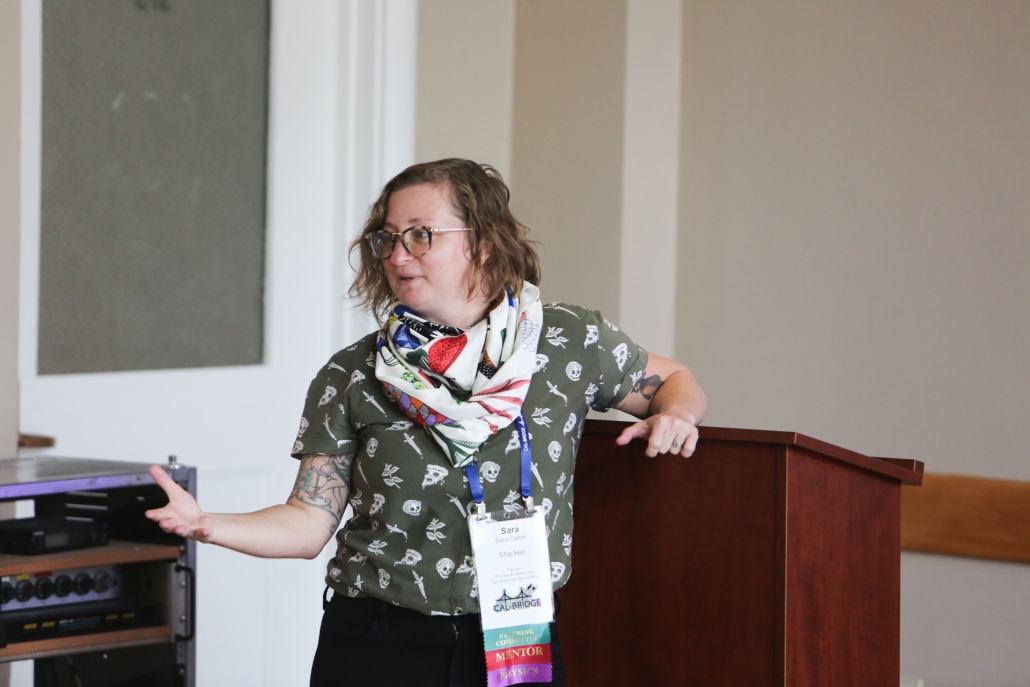
Dr. Sara Callori

Dr. Sara Callori

Associate Director, Undergraduate Program
CSU P&A Co-Director
Dr. Amy Furniss

Dr. Amy Furniss

Director, Cal-Bridge Summer
Dr. Katy Wimberly

Dr. Katy Wimberly

Mentorship and Alumni Council Chair

Co-Directors

Dr. Mu-Chun Chen

Dr. Mu-Chun Chen

UC P&A Undergrad Co-Director
Dr. Aaron Romanowsky

Dr. Aaron Romanowsky

CSU P&A Undergrad Co-Director
Dr. Suzanne Sindi

Dr. Suzanne Sindi

UC Math Undergrad Co-Director
Dr. Oscar Vega

Dr. Oscar Vega

CSU Math Undergrad Co-Director
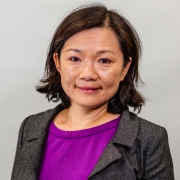
Dr. Mariam Salloum

Dr. Mariam Salloum

UC CSE Undergrad Co-Director
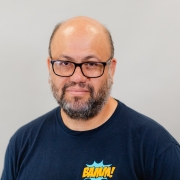
Dr. Mohammad Husain

Dr. Mohammad Husain

CSU CSE Undergrad Co-Director

Staff

Beka Douglas

Beka Douglas

Assistant Director, Cal-Bridge
Michelle DiPasquale

Michelle DiPasquale

Events Manager
Carrie Aiu

Carrie Aiu

Budget Analyst
Jeremy Jurgens

Jeremy Jurgens

Undergraduate Program Coordinator
Sonia Chen

Sonia Chen

Doctoral Program Coordinator

Mentors: CSU

Computer Science & Engineering
Dr. Ahmed Banafa
Dr. Alberto Cruz
Dr. Beverly Abadines Quon
Dr. Bin Tang
Dr. Carlos Rojas
Dr. Dae Hee Kim
Dr. Dale Oliver
Dr. Dongcheng Li
Dr. Fabio Di Troia
Dr. Fadi Muheidat
Dr. Hongmin Li
Dr. Kaiman Zheng
Dr. M Basit
Dr. Mariam Khazaei
Dr. Mark Baldwin
Dr. Mark Gondree
Dr. Megan Thomas
Dr. Mohammad Husain
Dr. Navrati Saxena
Dr. Sai Kosaraju
Dr. Sana Algaraibeh
Dr. Theresa Migler
Dr. Tingting Chen
Dr. Yan Zhang
Dr. Youwen Wang

Mathematics
Dr. Andrea Arauza-Rivera
Dr. Anthony Mendes
Dr. Barbara Bailey
Dr. Cash Bortner
Dr. Charles Lam
Dr. Chris Dugaw
Dr. Clark Fitzgerald
Dr. Cynthia Flores
Dr. Daniel Vallieres
Dr. Emily Clader
Dr. Gabriel Elvin
Dr. Jennifer Clinkenbeard
Dr. John Rock
Dr. Kathryn McCormick
Dr. Leslie Rodriguez
Dr. Michael Neubauer
Dr. Niny Arcila-Maya
Dr. Oscar Vega
Dr. Paul Choboter
Dr. Peter Goetz
Dr. Rui Hu
Dr. Tyler Evans
Dr. Vincent Bonini
Dr. Will Murray

Physics & Astronomy
Dr. Adekunle Aina
Dr. Alex Miller
Dr. Alex Pettitt
Dr. Anna Bezryadina
Dr. Arran Phipps
Dr. Brian Morsony
Dr. Brianne Gutmann
Dr. C.D. Hoyle
Dr. Claudia Ojeda-Aristizabal
Dr. Coral Wheeler
Dr. Cristina Cadavid
Dr. Curtis Asplund
Dr. David Brookes
Dr. Derek Kimball
Dr. Doug Leonard
Dr. Eileen Gonzales
Dr. Eric Ayars
Dr. Eric Sandquist
Dr. Fridolin Weber
Dr. Horace Crogman
Dr. Hyewon Pechkis
Dr. Jason Veatch
Dr. Jerome Orosz
Dr. Joe Barranco
Dr. Jonathan Daniel
Dr. Jorge Botana Alcalde
Dr. Kate Rubin
Dr. Katy Grimm
Dr. Katy Rodriguez Wimberly
Dr. Ken Wharton
Dr. Kevin Hayakawa
Dr. Krishna Sigdel
Dr. Lizvette Villafaña
Dr. Maryam Maleki
Dr. Matteo Crismani
Dr. Mehmet Dogan
Dr. Monty Mola
Dr. Ozgur Polat
Dr. Reza Monadi
Dr. Rodolfo Barniol Duran
Dr. Sara Callori
Dr. Shohreh Abdolrahimi
Dr. Stamatis Vokos
Dr. Sujoy Modak
Dr. Susan Terebey
Dr. Tabitha Swan-Wood
Dr. Tamara Barriquand
Dr. Teri Lambros
Dr. Thomas Gredig
Dr. Trey Wenger
Dr. Tyler Luchko
Dr. Vardha Bennert
Dr. Wing To
Dr. Yohannes Shiferaw

Mentors: UC

Computer Science & Engineering
Dr. Alex Cloninger
Dr. Allan Knight
Dr. Arpit Gupta
Dr. Dave Doty
Dr. Jay Lim
Dr. Jonathan Balkind
Dr. Josh McCoy
Dr. Katia Obraczka
Dr. Kristen Vaccaro
Dr. Mariam Salloum
Dr. Matthew Bietz
Dr. Nader Sehatbakhsh
Dr. Neftali Medina
Dr. Philip Brisk
Dr. Ram Sundara Raman
Dr. Roderic Crooks
Dr. Santosh Chandrasekhar
Dr. Sergio Gago-Masague
Dr. Suqi Liu
Dr. Tiffany Amariuta
Dr. Vivian Li
Dr. Weizi Li

Mathematics
Dr. Alex Cloninger
Dr. Bob Guy
Dr. Daniele Venturi
Dr. Dongwook Lee
Dr. Elena Fuchs
Dr. Esra Kurum
Dr. Hongyun Wang
Dr. Javier Arsuaga
Dr. Jeffrey Meyer
Dr. Juhee Lee
Dr. Kiran Kedlaya
Dr. Knut Solna
Dr. Manuel Reyes
Dr. Matt Jacobs
Dr. Milly Farid
Dr. Nathan Kaplan
Dr. Patrick Guidotti
Dr. Robert Webber
Dr. Shilpa Khatri
Dr. Steven Sam
Dr. Subir Ghosh
Dr. Suzanne Sindi
Dr. Weitao Chen

Physics & Astronomy
Dr. Aaron Barth
Dr. Adam Burgasser
Dr. Amy Furniss
Dr. Andrew Wetzel
Dr. Andy Joe
Dr. Andy Skemer
Dr. Anna Nierenberg
Dr. Chris Theissen
Dr. Connie Rockosi
Dr. Curtis McCully
Dr. David Lederman
Dr. David Strubbe
Dr. David Williams
Dr. David Wittman
Dr. Deborah Fygenson
Dr. Eddie Schwieterman
Dr. Edgar Shaghoulian
Dr. Ellie Tubman
Dr. Eve Lee
Dr. Feng Wang
Dr. Griffen Hosseinzadeh
Dr. Heather Gray
Dr. Javier Sanchez-Yamagishi
Dr. Jay Sharping
Dr. Jing Xu
Dr. Joan-Emma Shea
Dr. Julio Barreiro
Dr. Kev Abazajian
Dr. Kinjal Dasbiswas
Dr. Kyle Kremer
Dr. Laura Sales
Dr. Lloyd Knox
Dr. Luca Iliesiu
Dr. Luis Jauregui
Dr. Manuel Calderón de la Barca Sánchez
Dr. Marjorie Shapiro
Dr. Matthew Citron
Dr. Max Chertok
Dr. Michael Bottom
Dr. Mu-Chun Chen
Dr. Omar Saleh
Dr. Ori Ganor
Dr. Ryan Baumbach
Dr. Ryan Foley
Dr. Samantha Trumbo
Dr. Sarah Loebman
Dr. Sergey Syzranov
Dr. Shirely Li
Dr. Shirley Li
Dr. Stefano Profumo
Dr. Steph Sallum
Dr. Valentin Taufour
Dr. Vicky Xu
Dr. Wolfgang Altmannshofer
Dr. Zvonimir Dogic

Become a Faculty Mentor

CSU and UC faculty can become mentors in the Cal-Bridge program. Each Cal-Bridge undergraduate scholar is assigned two mentors: a CSU faculty member at their home institution and a UC faculty member. Mentors are assigned such that at least one mentor, and often both, have a research background in the scholar’s proposed research area (physics, astronomy, computer science/engineering, or math). In most cases, at least one mentor is of the same gender as the scholar; less frequently, but whenever possible, at least one mentor is assigned from the same racial, ethnic, or cultural background as the scholar. Some of the key elements of mentorship include:

  • Mentorship takes place via twice-monthly meetings between each scholar and their two mentors. 
  • The CSU faculty mentor gives academic advice on course selection and study habits, guides students toward research opportunities, and helps them apply to graduate school. 
  • The UC mentor performs similar functions and is also uniquely qualified to provide guidance towards readiness for graduate school. UC mentors are also commonly summer research mentors. 
  • Mentors in the undergraduate program commit to work with the scholar for two years.Are you a Faculty member that is Interested in becoming a Cal-Bridge undergraduate mentor?  Please contact us!
  • The CSU mentor also obtains monthly feedback from each scholar’s instructors to track academic progress and catch problems early, which allows for intervention when necessary (e.g., advice on improving a student’s study habits).
  • In cases where more intensive academic support in particular courses is needed, mentors may recommend tutoring; in such cases, qualified graduate student tutors are identified by Cal-Bridge faculty and these tutors are hired by the program. 

Mentors are given access to training and guidance to provide culturally aware mentorship for scholars to feel comfortable talking about not only academic issues but also other concerns that might be impacting their academic success, including mental health issues, home or family issues, or other personal matters. Cal-Bridge mentors are supported in this highly engaged mentorship practice in 3 ways: 

  1. A Mentorship Handbook written by experienced mentors and alumni scholars from within the Cal-Bridge program to address both mentor and scholar responsibilities and best practices 
  2. A series of professional development workshops on best practices in mentorship, including mentoring students from backgrounds different from that of the mentor 
  3. Additional mentorship workshops led by national experts in mentoring, including the National Academy of Science workshops “The Science of Effective Mentoring” and “Mentoring for Wellbeing”

Core Values

Welcoming

We create an inviting and collaborative atmosphere. We are inclusive in our words and actions. We embrace people of all backgrounds, experiences, and perspectives, and treat them with respect. We actively listen, learn, and engage with compassion, validation, and intention. We work to make STEM undergraduate and doctoral programs as welcoming as possible for everyone. We bring together historically underrepresented scholars, established faculty mentors, and PhD admission decision-makers to increase the inclusivity of STEM disciplines, especially PhD programs.

Personal

We are invested in the individual stories, backgrounds, real-life struggles, and drive to succeed of our scholars. We recognize that our primary responsibility is to support and engage with each scholar throughout their entire academic journey. We match each scholar with trained mentors to provide personalized support at every step of their pathway to the PhD and through the years of postgraduate study. We schedule time and integrate cohort building into each event and workshop to foster relationships and networking. We encourage our scholars to share their stories, fostering a culture of openness and inspiration. We share our success stories with each other and through Cal-Bridge media.

Empowering

We are a program that works to empower the remarkable scholars we support as well as all those who help us deliver on the Cal-Bridge mission. We strive to equip our scholars to become STEM leaders and effect change, by giving them the tools and resources they need to thrive academically. We work to help all Cal-Bridge community members feel the possibility, excitement, and confidence that they can be part of the changing face of STEM leadership through their support for each step in the scholars’ journeys.

Academic

We are a higher education academic support program that provides formal training, research opportunities, course guidance, mentorship, and tutoring to our scholars. We built the program around summer research experiences, professional development, and workshops that give structured professional advice and admissions support from experienced statewide faculty leadership. We bridge the transitions between the California CC, CSU, and UC systems. We facilitate connections between undergraduate, master’s, and PhD programs. We are intersegmental and help scholars navigate between institutions while removing barriers of access. We present ourselves from this knowledgeable academic standpoint while remaining approachable to all levels and members of our community.

Contact Us